Introduction
Sourdough baking has a reputation for being tricky—but it doesn’t have to be stressful. With just a few ingredients, a little patience, and the right approach, you can start your own sourdough starter at home and watch it bubble and grow.
Whether you dream of crusty loaves or soft sandwich bread, a healthy starter is the first step. This guide will take you through everything you need to know to start sourdough confidently, without the anxiety or failed attempts.
Step 1: Gather Your Ingredients
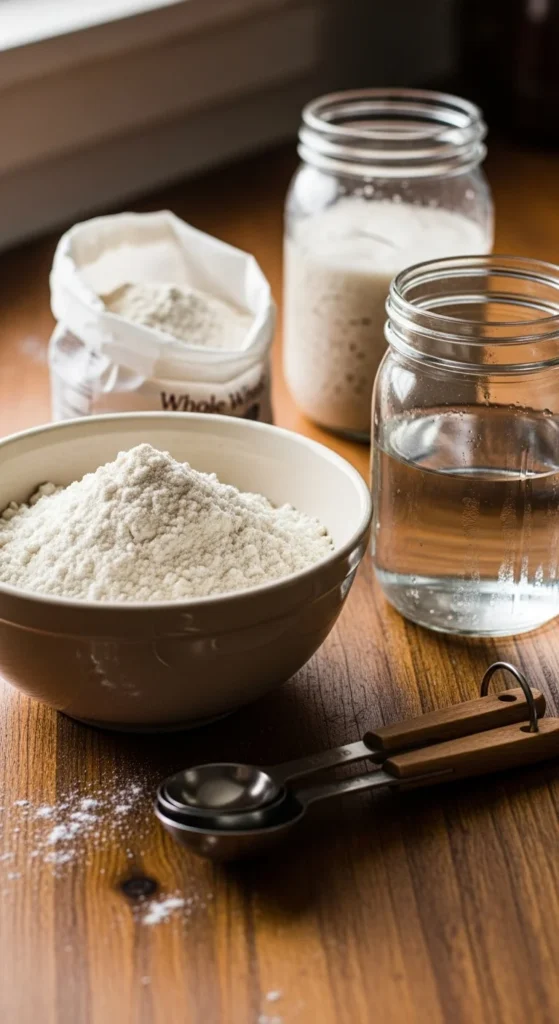
Starting sourdough is surprisingly simple. You’ll need just a few basics:
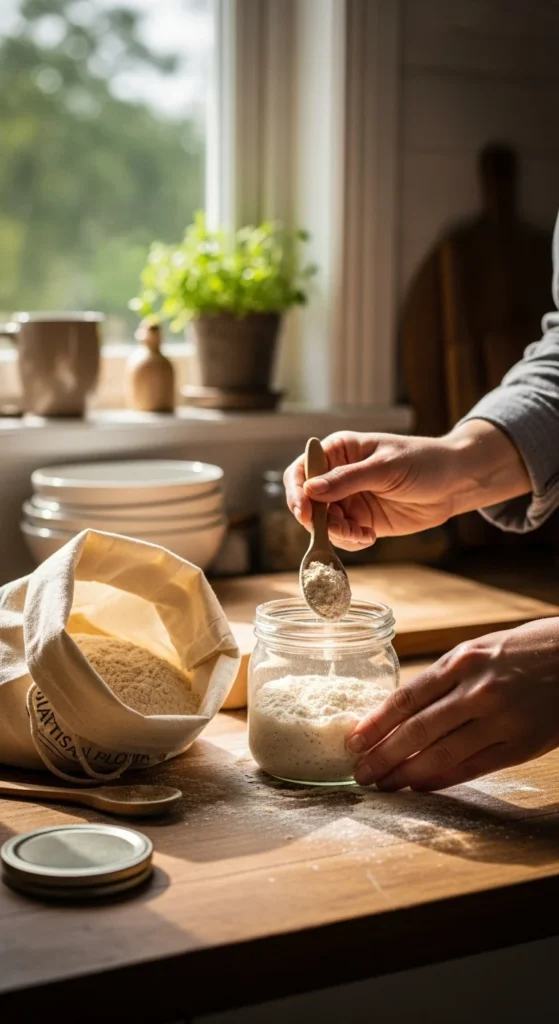
- ½ cup whole wheat or all-purpose flour
- ½ cup water (filtered or dechlorinated is best)
Tip: Whole wheat flour kickstarts fermentation faster due to natural nutrients.
Step 2: Mix Your Starter
- Combine the flour and water in a clean glass jar.
- Stir until there are no dry patches.
- Loosely cover with a cloth or lid to allow airflow.
Pro Tip: Keep the jar in a warm spot (70–75°F) to encourage natural yeast growth.
Step 3: Feeding Your Starter
Your starter needs daily feedings to grow strong:
- Each day, discard half of the starter.
- Add ¼ cup flour and ¼ cup water.
- Stir well and cover loosely again.
Tip: Consistency is key—feeding at the same time each day helps the starter develop predictable activity.
Step 4: Understanding the Signs
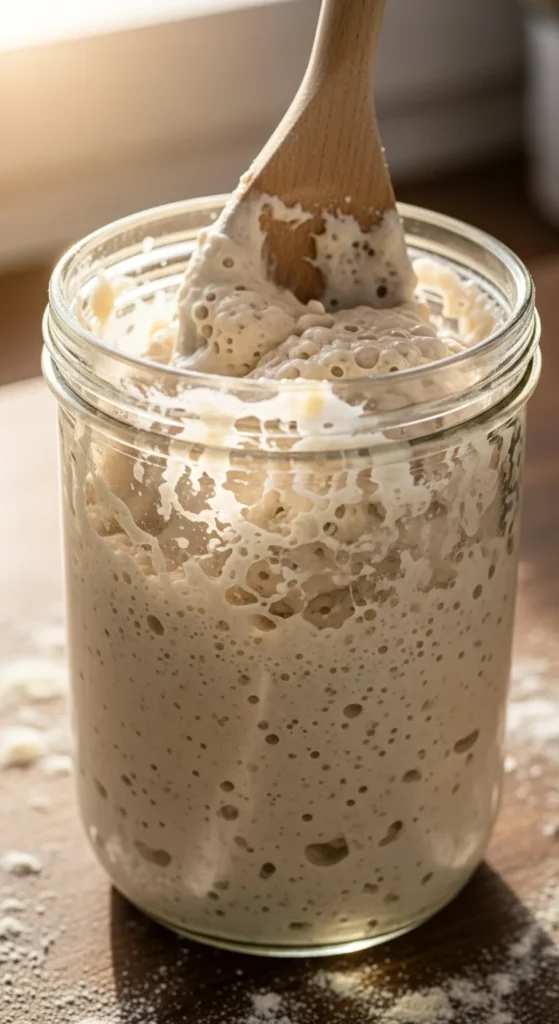
After 5–7 days, your starter should be ready for baking:
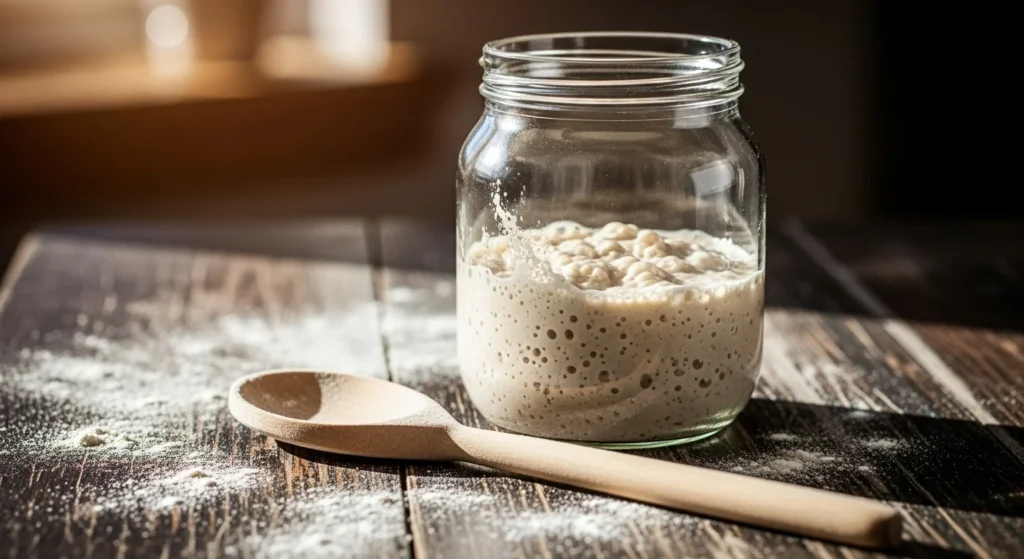
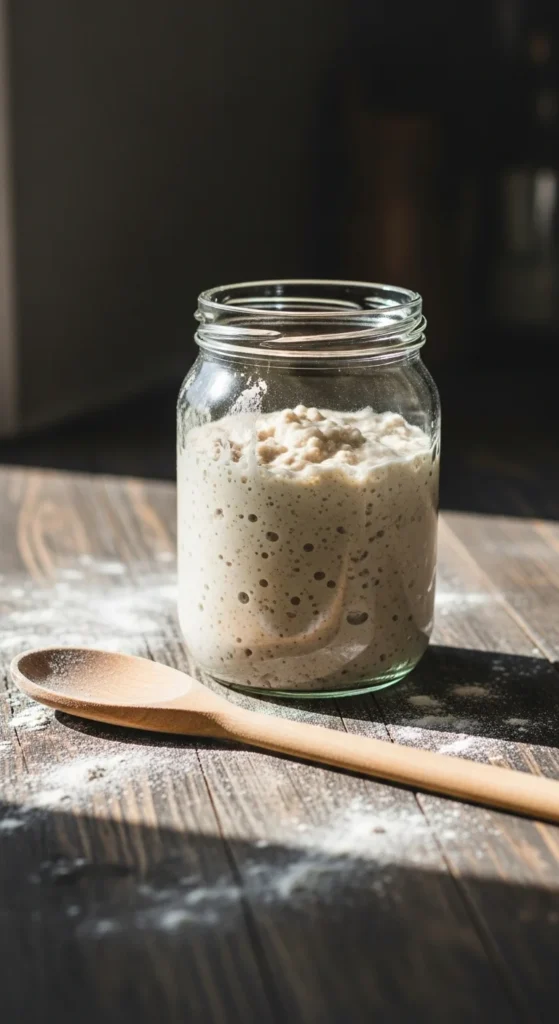
- It doubles in size within 4–6 hours of feeding.
- Bubbles are visible throughout.
- It has a pleasant, slightly tangy aroma.
Tip: If it smells off or has mold, start over with a clean jar.
Step 5: Using Your Starter
Once active, you can use your starter for:
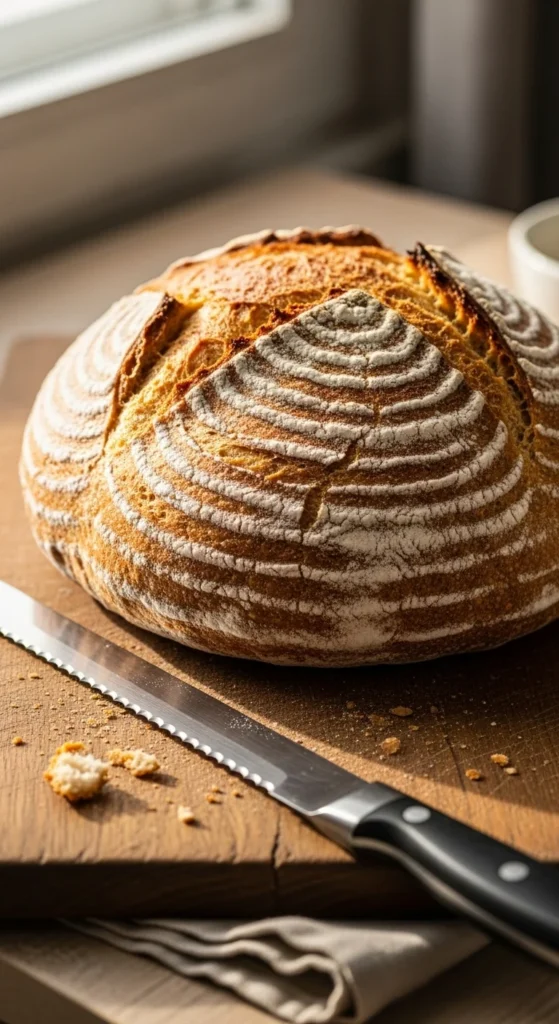
- Sourdough bread loaves: Soft inside, crusty outside.
- Pancakes or waffles: Adds tang and texture.
- Pizza dough: Light and airy crust.
Tip: Keep a portion of starter in the fridge if you bake less frequently. Feed once a week to maintain its strength.
Tips for Stress-Free Sourdough
- Use a glass jar: Easy to monitor bubbles and growth.
- Keep it warm: Yeast activity slows in cold spots.
- Patience is essential: Every starter develops at its own pace.
- Be consistent: Regular feedings prevent weak or overly acidic starter.
- Don’t overcomplicate: Simple flour and water is enough—extra ingredients aren’t necessary at the beginning.
Takeaway
Starting sourdough at home doesn’t have to be intimidating. With patience, consistency, and these simple steps, you can grow a thriving starter and enjoy homemade bread, pancakes, and more.
Save this guide, start your starter today, and watch your kitchen fill with the smell of freshly baked sourdough! 🍞✨