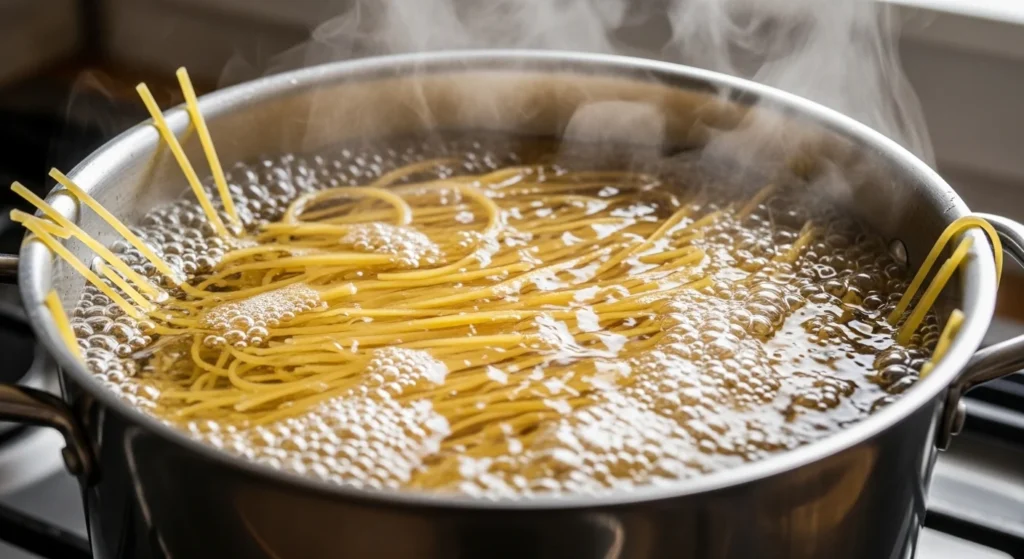
Perfect pasta isn’t mushy, sticky, or bland—it’s tender on the outside with a slight, satisfying firmness at the center. That magical texture is called al dente, and once you nail it, every pasta dish instantly tastes more restaurant-worthy.
If your pasta often turns out too soft or clumps together, don’t worry. Cooking pasta with the perfect bite is all about timing, water, and a few simple but crucial habits.
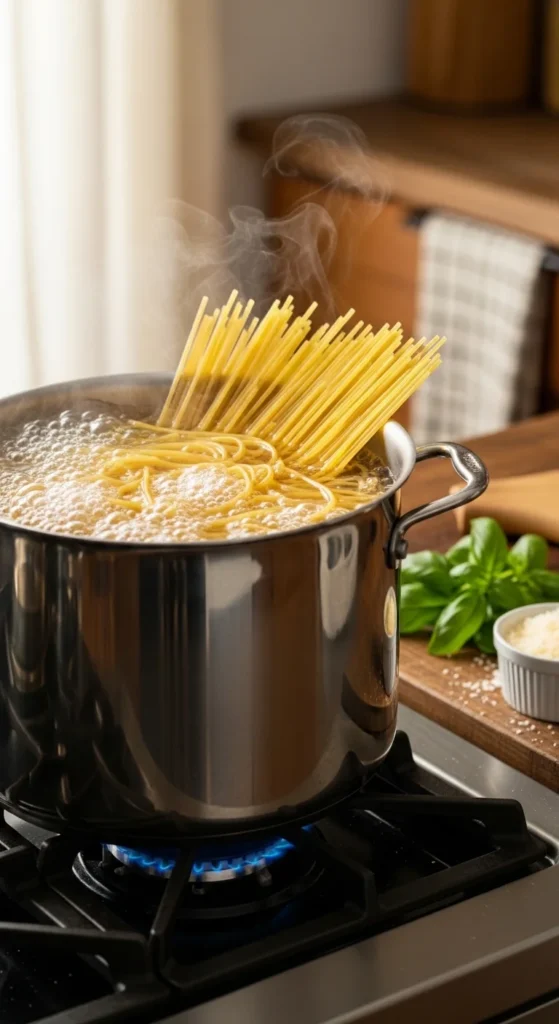
Let’s walk through exactly how to cook pasta so it has that ideal bite—every single time.
Start With Plenty of Water
Crowding pasta is one of the fastest ways to end up with sticky, unevenly cooked noodles.
The golden rule:
- Use a large pot
- About 4–5 liters of water per 500 g (1 lb) of pasta
Plenty of water allows the pasta to move freely, preventing clumps and ensuring even cooking.
More water also means the temperature doesn’t drop too much when the pasta is added, which helps maintain the right texture.
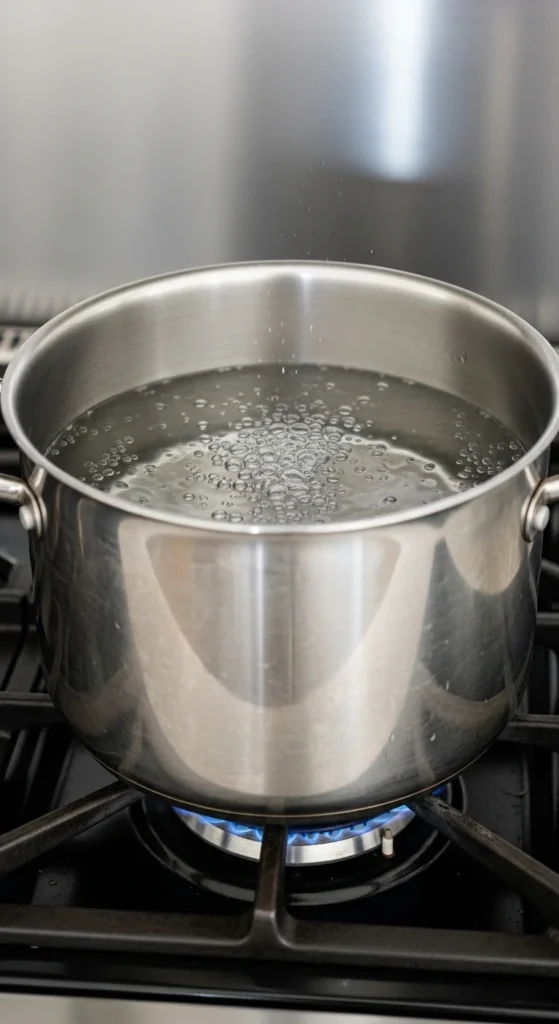
Salt the Water Like the Sea
This step is non-negotiable. Pasta absorbs water as it cooks, and that’s your only real chance to season it from the inside.
How much salt?
- About 1–1½ tablespoons salt per 4 liters of water
The water should taste pleasantly salty—not overpowering, but noticeable.
Skip the oil. Adding oil to the water won’t prevent sticking and can actually keep sauce from clinging to the pasta later.
Add Pasta Only After a Rolling Boil
Always wait until the water is at a full, rolling boil before adding pasta.
Why it matters:
- Prevents pasta from absorbing water too slowly
- Helps noodles keep their shape
- Reduces sticking
Once you add the pasta:
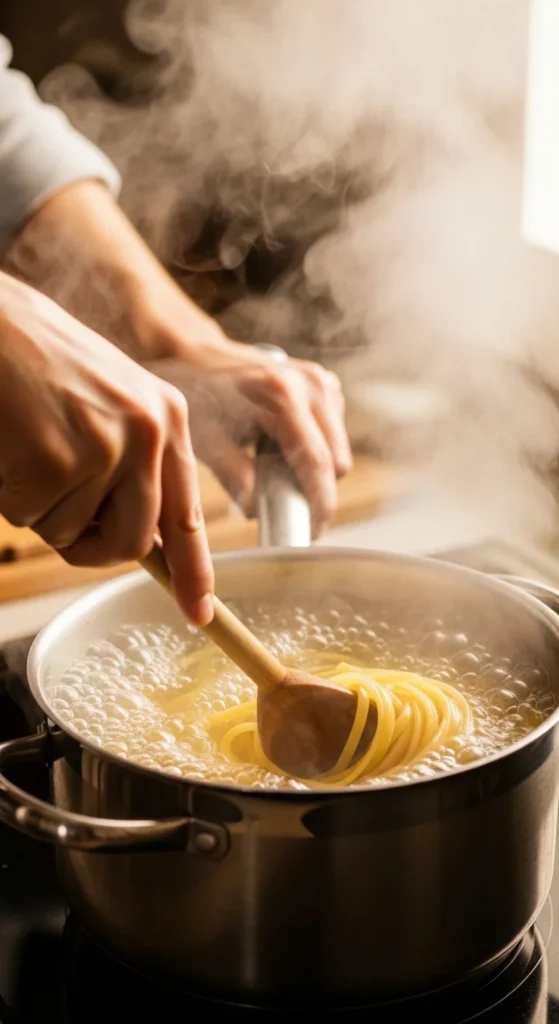
- Stir immediately for the first 30 seconds
- Stir again after a minute
This initial stirring is key to keeping strands or shapes from sticking together.
Follow the Package Time—but Don’t Trust It Completely
Package instructions are a guideline, not a guarantee.
What to do instead:
- Set a timer for 1–2 minutes less than the package suggests
- Start tasting early
Perfect pasta should:
- Be tender
- Have a slight resistance when bitten
- Show no raw white center when cut
If it’s soft all the way through, it’s already overcooked.
Reserve Pasta Water Before Draining
This small step makes a huge difference in texture and sauce quality.
Before draining:
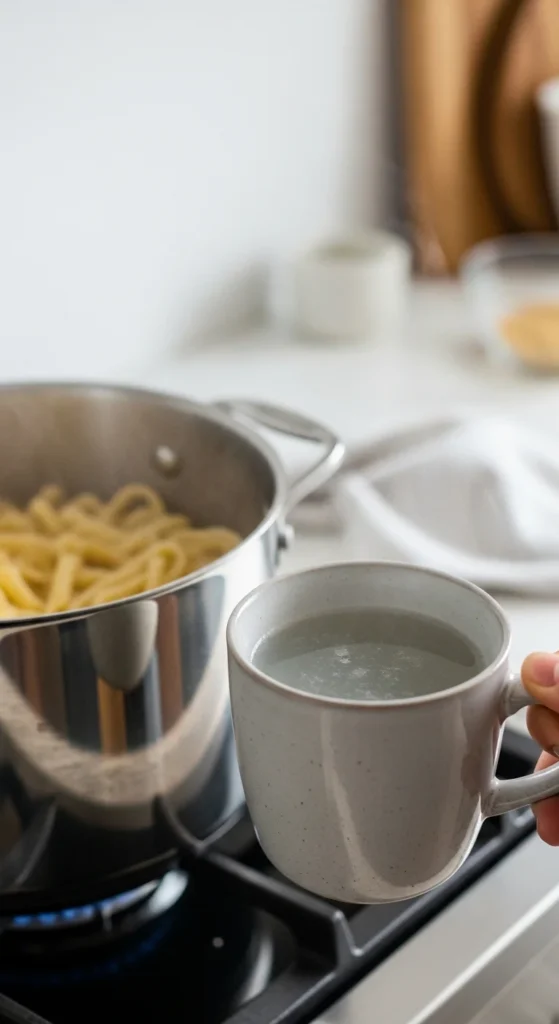
- Scoop out ½–1 cup of pasta water
Pasta water is starchy and salty, which helps:
- Loosen thick sauces
- Bind sauce to pasta
- Enhance flavor without extra fat
Drain, But Don’t Rinse (Most of the Time)
Rinsing pasta washes away the surface starch that helps sauce cling.
Don’t rinse if:
- You’re serving pasta hot
- You’re using a sauce
Rinse only if:
- Making pasta salad
- Stopping cooking immediately for cold dishes
After draining, add pasta directly to the sauce while it’s still hot. This final step helps pasta absorb flavor without losing its bite.
Finish Cooking Pasta in the Sauce
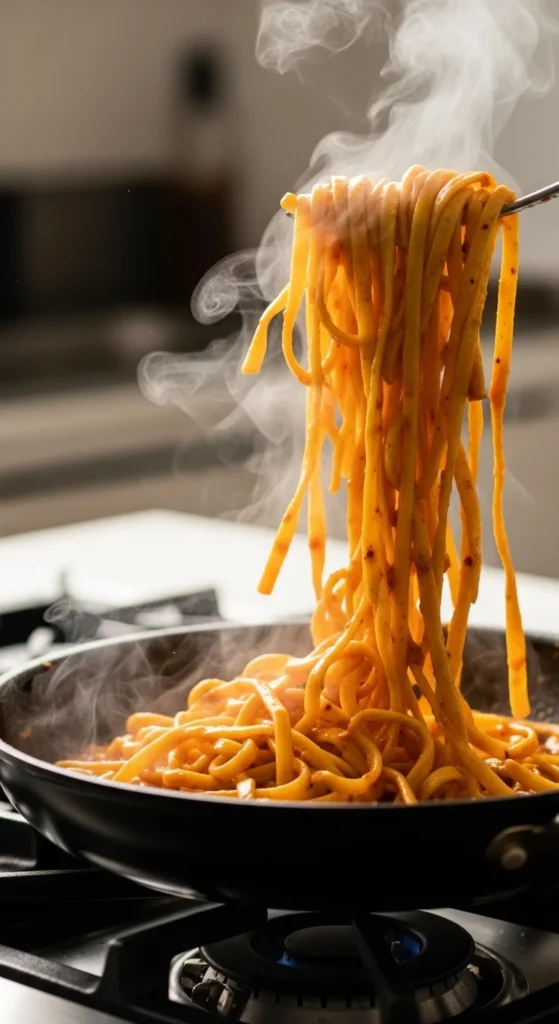
For truly perfect texture, let the pasta finish cooking in the sauce for 1–2 minutes.
Why this works:
- Pasta absorbs flavor, not just water
- Texture stays firm but tender
- Sauce coats every piece evenly
Add reserved pasta water a splash at a time to loosen the sauce if needed.
Serve Immediately for the Best Bite
Pasta continues to soften as it sits. For the perfect bite:
- Serve right away
- Avoid covering tightly (traps steam)
- Add final touches just before serving
Final finishing ideas:
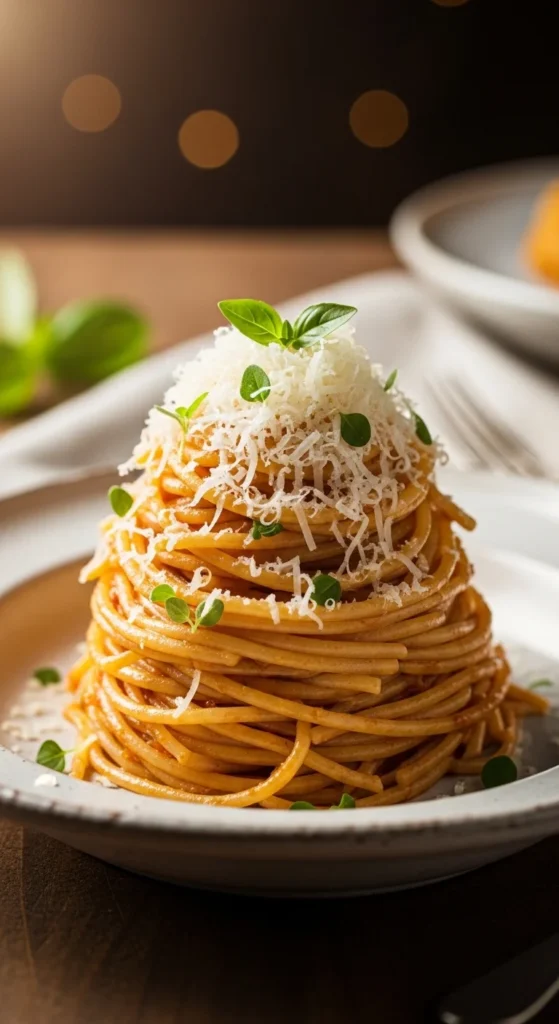
- Freshly grated Parmesan
- Drizzle of olive oil
- Fresh herbs
- Cracked black pepper
Final Takeaway
Cooking pasta with the perfect bite isn’t complicated—but it does require attention. Use plenty of salted water, taste early, skip the rinse, and finish in the sauce. These small habits add up to pasta that’s firm, flavorful, and never mushy.
👉 Save this guide for your next pasta night—and say goodbye to overcooked noodles forever!