If you’ve ever tried to stretch pizza dough and ended up with a stubborn, springy mess—or worse, a torn center—you’re not alone. Great pizza dough should stretch easily, hold its shape, and bake up chewy and light, not tough or dry. The secret isn’t fancy equipment or professional ovens. It’s about hydration, gluten development, and patience.
Let’s break down exactly how to make pizza dough that stretches like a dream.
Start With the Right Dough Formula
Stretchy pizza dough begins with balance. Too much flour makes dough stiff. Too little structure makes it tear.
The ideal base ingredients:
- All-purpose or bread flour
- Warm water (not hot)
- Yeast
- Salt
- Olive oil
Why this works:
- Higher hydration (more water) makes dough softer and extensible
- Olive oil coats gluten strands, reducing resistance
- Bread flour adds strength while still allowing stretch
Aim for dough that feels slightly tacky but not sticky. If it feels dry in the bowl, it’ll fight you later.
Hydration Is the Real Secret to Stretchability
Dry dough is the #1 reason pizza dough snaps back.
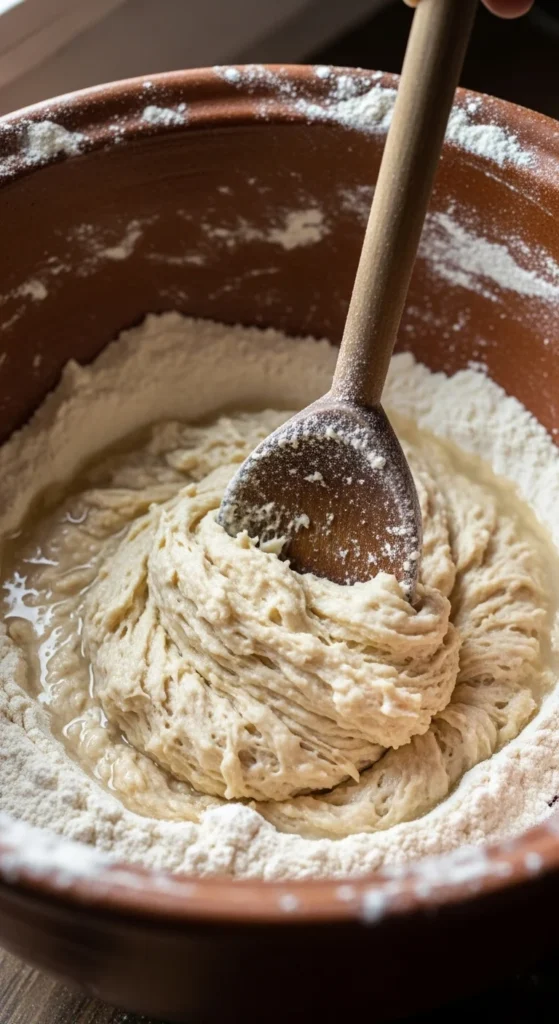
What you want:
- A dough that looks rough at first
- Slight stickiness when touched
- Soft, pliable texture after resting
Pro tip:
Resist the urge to add extra flour early. Dough firms up as gluten develops and moisture absorbs.
Knead Just Enough (Not Too Much)
Kneading builds gluten, which gives dough strength—but overdoing it makes dough tight and elastic instead of relaxed.
How to knead properly:
- Knead by hand 8–10 minutes or mixer 5–6 minutes
- Dough should become smooth and elastic
- It should spring back slowly when pressed
Signs you’re done:
- Dough surface is smooth, not rough
- It stretches without tearing
- It passes the “windowpane test” (stretches thin without ripping)
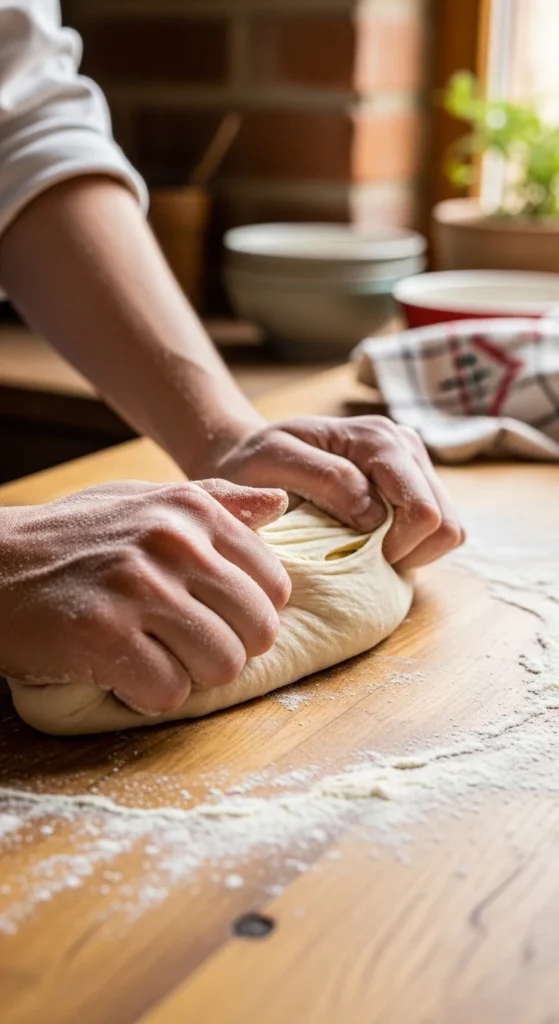
Stop kneading as soon as you hit this stage.
Resting the Dough Makes It Stretchable
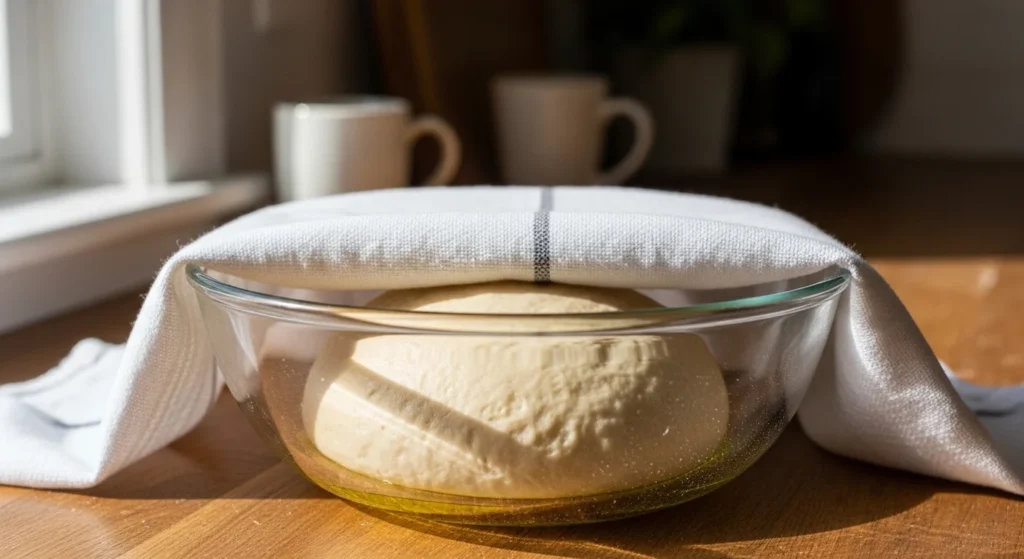
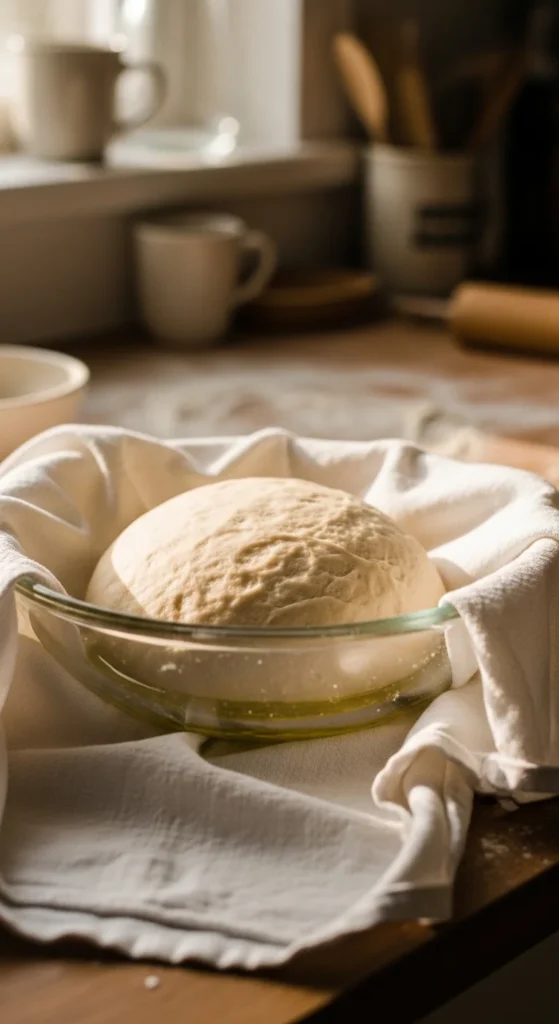
This step is non-negotiable. Gluten tightens during kneading and must relax before shaping.
Minimum rest:
- 30–45 minutes at room temperature
Best results:
- 24–72 hours in the refrigerator
Why cold fermentation works:
- Gluten relaxes naturally
- Dough becomes more extensible
- Flavor improves dramatically
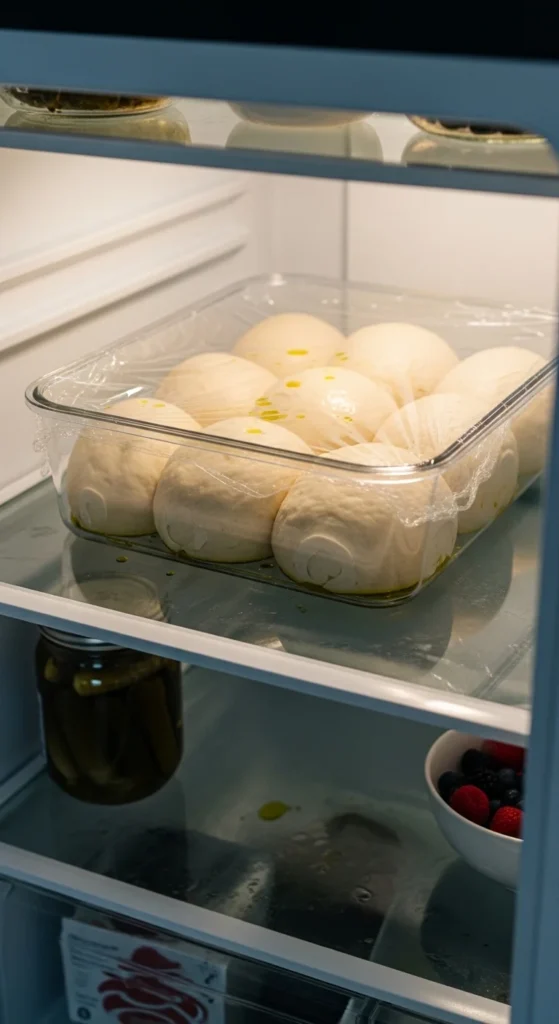
Before shaping:
- Remove dough from fridge 60–90 minutes ahead
- Let it come to room temperature
- Cold dough resists stretching
Divide and Shape Gently
Rough handling knocks out gas and tightens gluten again.
Do this instead:
- Divide dough using a bench scraper
- Shape into smooth balls
- Tuck edges underneath to create surface tension
Lightly oil each dough ball and cover so it doesn’t dry out.
Stretch With Gravity, Not Force
Rolling pins squeeze out air and make dough dense. Stretching preserves bubbles and creates that airy crust.
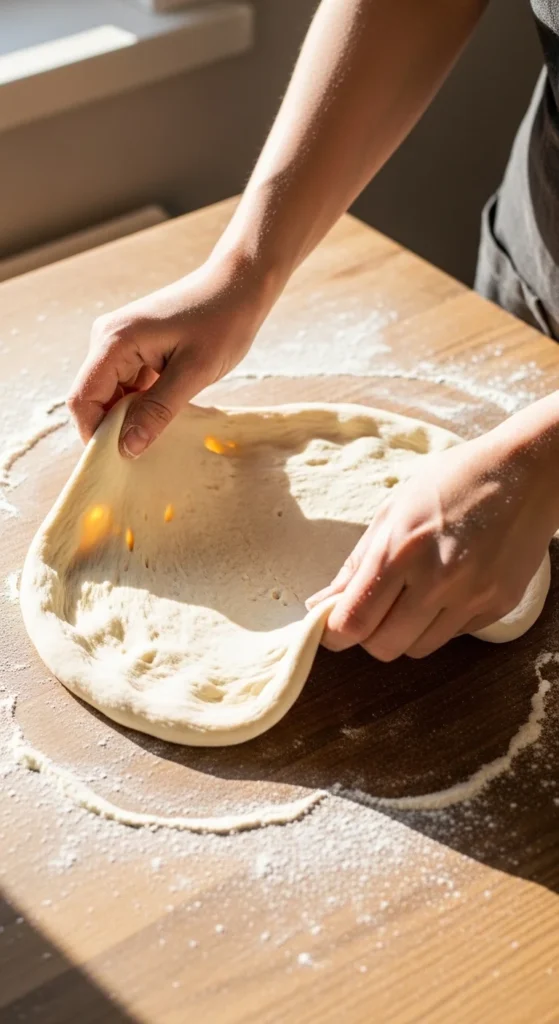
Best stretching method:
- Lightly flour the dough ball
- Press gently from the center outward
- Lift and stretch over knuckles
- Let gravity do the work
Avoid:
- Pulling hard at the edges
- Stretching cold dough
- Over-flouring (causes stiffness)
If dough snaps back:
- Stop
- Let it rest 5–10 minutes
- Try again
That pause allows gluten to relax again.
Fix Common Stretching Problems Fast
Dough keeps shrinking back
- Needs more rest
- Possibly over-kneaded
Dough tears easily
- Too dry
- Add more hydration next batch
Dough sticks
- Use flour sparingly
- Dust hands, not the dough heavily
Final Takeaway
Easy-to-stretch pizza dough is all about moisture, gluten relaxation, and patience. Keep the dough soft, let it rest generously, and stretch gently. When the dough cooperates, everything else—crust texture, oven spring, and flavor—falls into place.
Save this guide for pizza night, and your dough will finally work with you, not against you 🍕✨