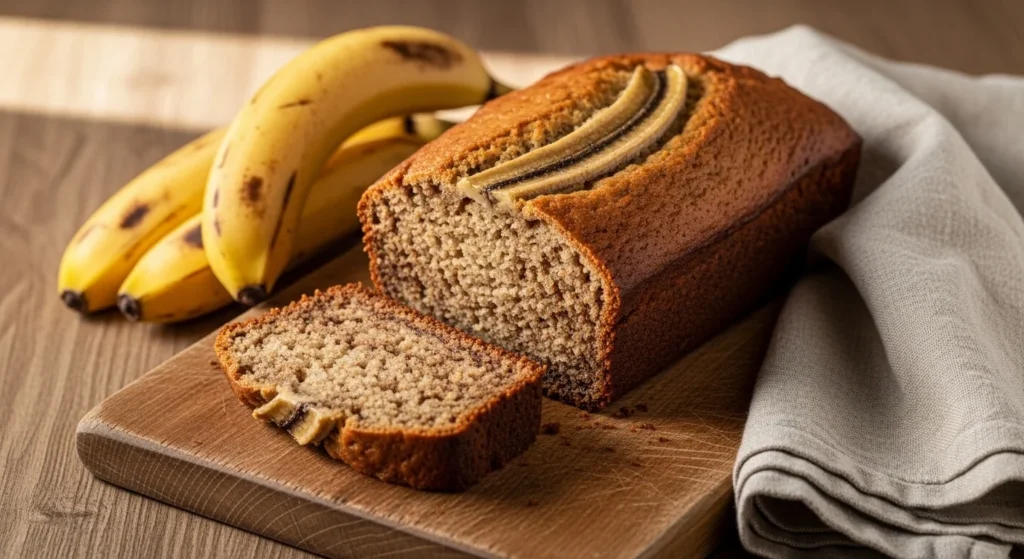
There’s something deeply comforting about banana bread. The warm aroma, the golden crust, that first tender slice—it’s pure cozy. But let’s be real: banana bread can go wrong fast. Dry, crumbly, or bland loaves are heartbreak in baked form. The good news? Moist banana bread isn’t about luck. It’s about a few smart choices and simple techniques.
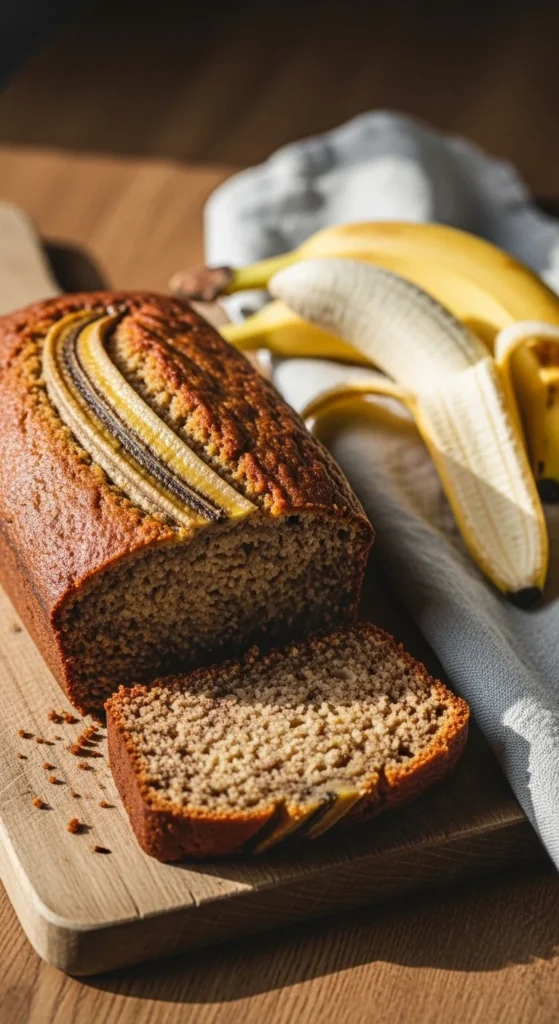
Let’s walk through exactly how to bake banana bread that stays moist for days (yes, days).
Start With Very Ripe Bananas
(The Riper, the Better)
If your bananas aren’t borderline ugly, they’re not ready yet. Ripe bananas are the foundation of moist banana bread.
What you want:
- Deep yellow peels with lots of brown spots
- Soft enough to mash easily
- Strong banana aroma
Why it matters:
- Riper bananas are sweeter, so you don’t need excess sugar
- They contain more moisture, which directly affects texture
Pro tip:
If your bananas aren’t ripe yet, place them in a paper bag overnight or bake them (peel on) at 300°F (150°C) for 15–20 minutes until blackened.
Choose Ingredients That Lock In Moisture
Banana bread is forgiving, but ingredient choices still matter—especially fats and sugars.
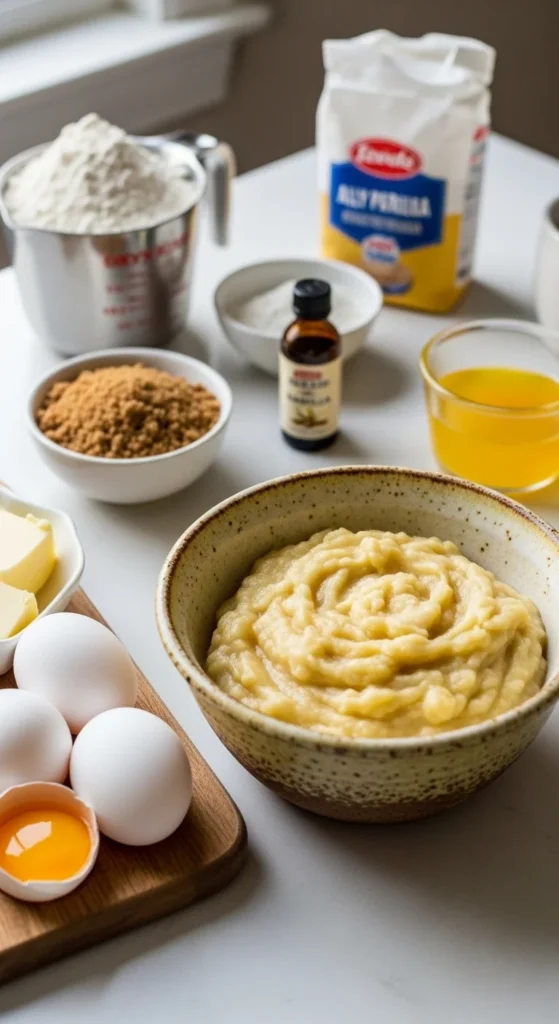
Moisture-boosting staples:
- Brown sugar instead of white – it contains molasses, which adds moisture
- Butter or oil – butter adds flavor, oil adds lasting moisture (a mix works great)
- Eggs – structure + richness
- A splash of dairy – yogurt, sour cream, or milk keeps the crumb tender
Optional but amazing:
- Greek yogurt or sour cream (2–4 tablespoons)
- Honey or maple syrup (replace a small portion of sugar)
Don’t Overmix the Batter
(This Is Huge)
This is where many banana breads fail. Overmixing activates gluten, which leads to a dense, dry loaf.
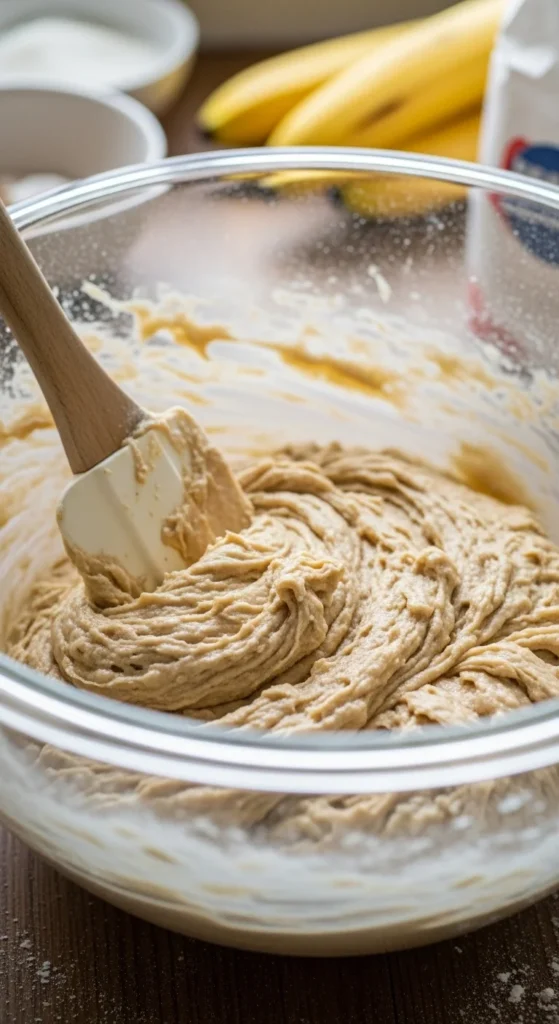
How to mix it right:
- Mash bananas separately
- Mix wet ingredients until just combined
- Add dry ingredients last
- Fold gently until no dry flour pockets remain
The batter should look:
- Thick but pourable
- Slightly lumpy (that’s good!)
Stop mixing the moment everything comes together.
Bake Low and Slow for an Even,
Moist Crumb
High heat dries out banana bread before the center finishes baking. Lower, steadier heat is your friend.
Best baking setup:
- Oven temperature: 325–350°F (165–175°C)
- Pan: metal or light-colored loaf pan
- Position: middle rack
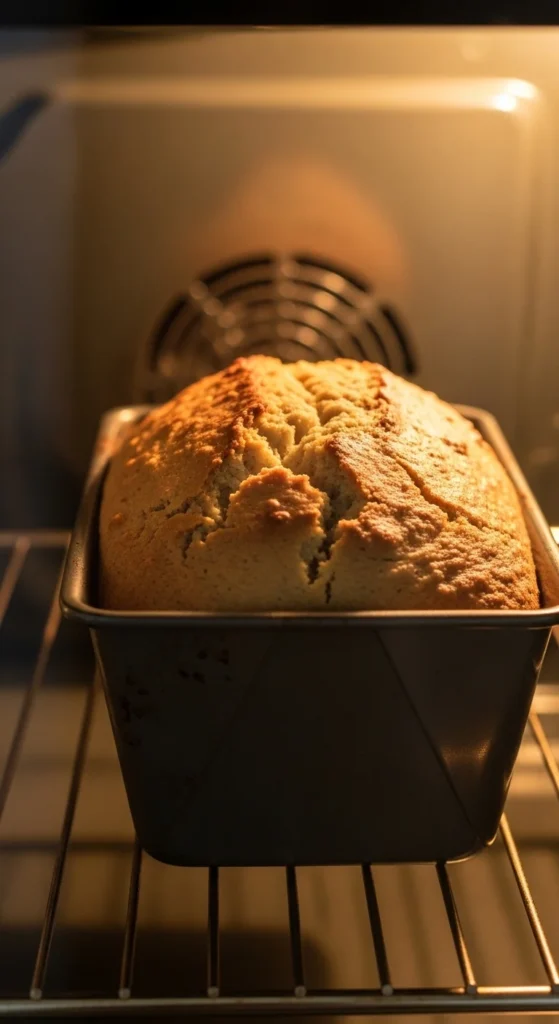
Bake until:
- A toothpick comes out with a few moist crumbs (not wet batter)
- The top is golden and slightly cracked
If the top browns too quickly, loosely tent with foil for the final 10–15 minutes.
Let It Cool (Yes, It Matters)
Cutting too early lets steam escape—and that steam is moisture.
Cooling tips:
- Cool in the pan for 10–15 minutes
- Transfer to a wire rack
- Let cool at least 30 minutes before slicing
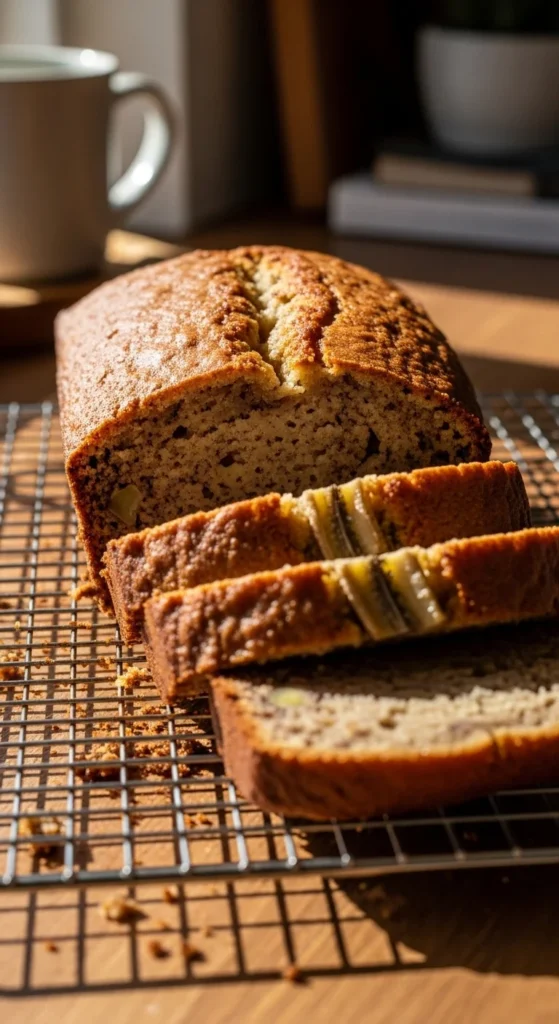
This resting time allows the crumb to set and stay tender.
Smart Storage = Moist Banana Bread for Days
Banana bread often tastes better the next day—if stored correctly.
Best storage methods:
- Wrap tightly in plastic wrap or foil
- Store at room temperature for up to 3 days
- Refrigerate only if your kitchen is very warm
For longer storage:
- Slice and freeze individually
- Wrap slices well and freeze up to 3 months
- Thaw at room temperature or warm gently
Optional Add-Ins That Keep It Tender
Add-ins can actually help moisture when used wisely.
Great options:
- Chopped walnuts or pecans (don’t overdo it)
- Chocolate chips
- Swirls of peanut butter or Nutella
Tip:
Toss add-ins lightly in flour before folding in to prevent sinking.
The Big Takeaway
Moist banana bread isn’t complicated—it’s intentional. Use ripe bananas, choose moisture-loving ingredients, mix gently, bake patiently, and let it rest. Do that, and you’ll get a soft, tender loaf every single time.
Save this recipe for later, and the next time bananas start turning spotty, you’ll know exactly what to do 🍌🍞