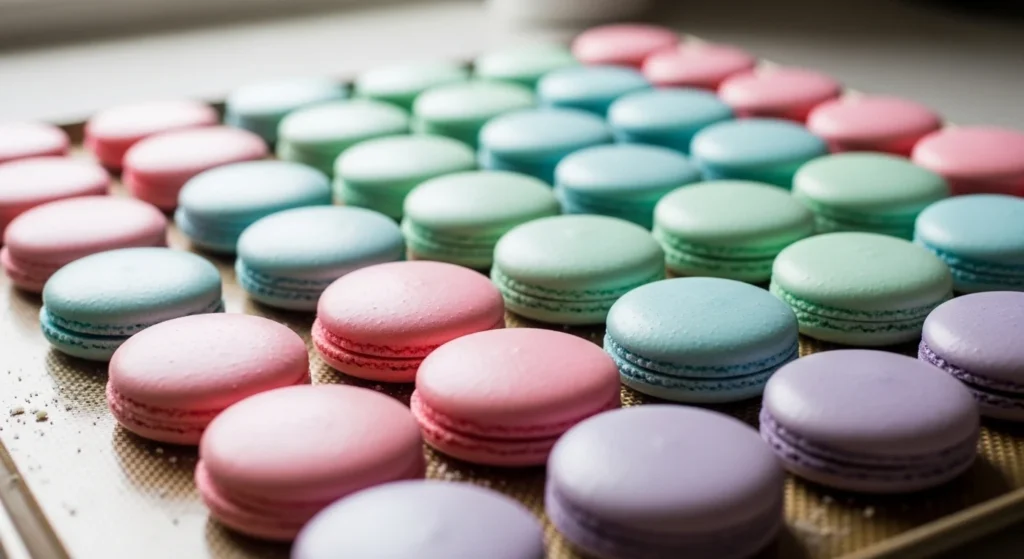
Macarons are beautiful, delicate, and famously tricky. If you’ve ever pulled a tray from the oven only to see cracked tops, lopsided shells, or hollow centers, you’re not alone. The good news? Cracked macarons aren’t bad luck—they’re usually the result of a few fixable mistakes.
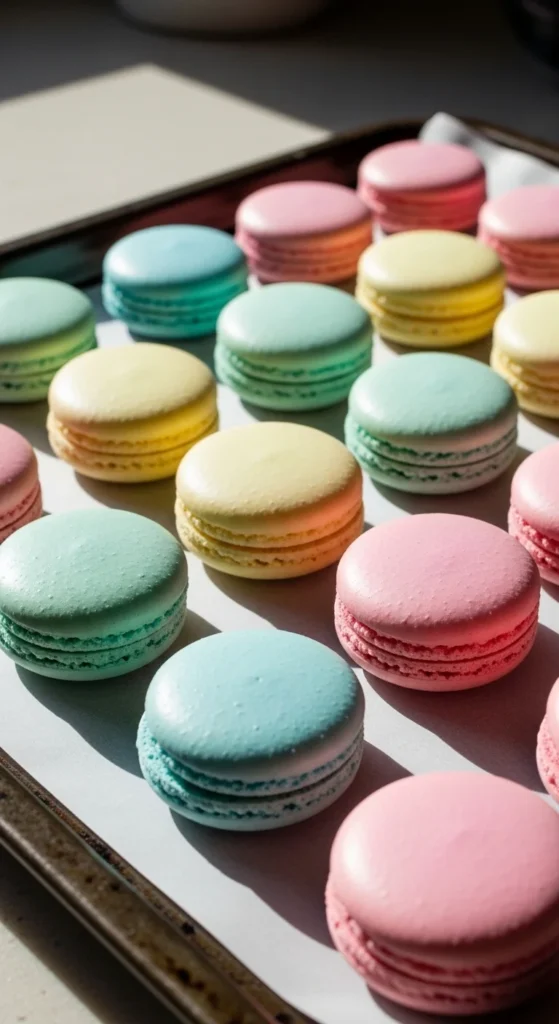
With the right technique and a little patience, you can bake smooth, glossy macarons that rise evenly and stay crack-free. Let’s walk through exactly how to do it.
Why Do Macarons Crack?
Understanding the cause helps prevent the problem.
Macarons crack when:
– Trapped air expands too quickly
– Shells haven’t formed a proper skin
– Oven temperature is too high
– Batter is overmixed or undermixed
Cracks are basically steam escaping through the weakest point. Your job is to control moisture, air, and heat.
Use the Right Ingredients
(Precision Matters)
Macarons are not forgiving—measure carefully.
You’ll need:
– Finely ground almond flour
– Powdered (icing) sugar
– Granulated sugar
– Egg whites (room temperature)
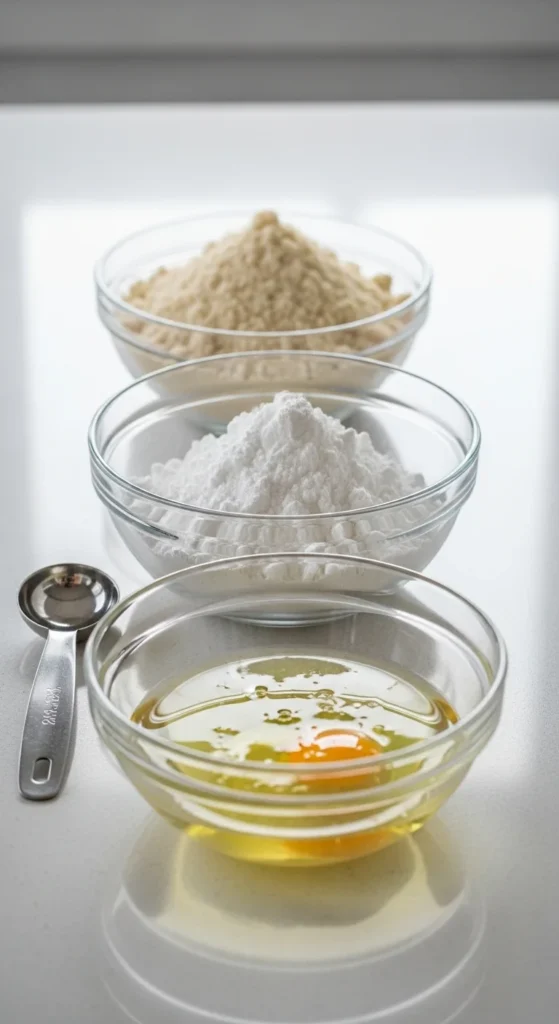
Ingredient tips:
– Sift almond flour and powdered sugar together twice
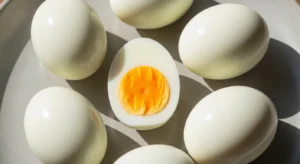
– Use aged egg whites if possible (separate and refrigerate 24 hours, then bring to room temp)
– Avoid liquid food coloring—use gel or powder
Master the Macaronage (Mixing Stage)
Macaronage is the step where most cracking problems start.
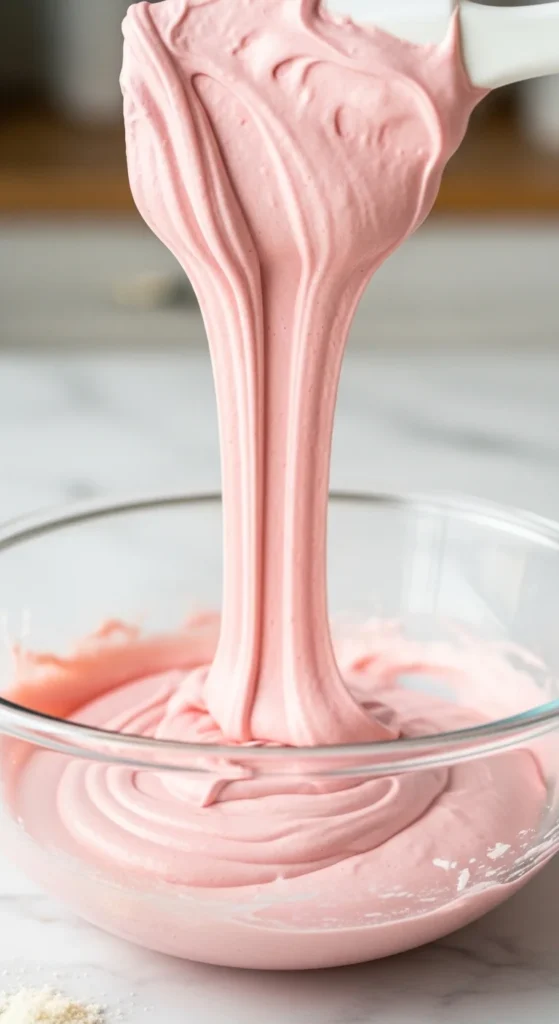
You’re aiming for batter that flows like:
– Lava
– Thick ribbons
– Slowly disappearing lines
How to test:
– Lift spatula and let batter fall
– It should form ribbons that disappear in about 10–15 seconds
Common mistakes:
– Undermixing → peaks and cracked tops
– Overmixing → flat, spread-out shells
Stop mixing as soon as you hit the ribbon stage.
Pipe Evenly for Uniform Baking
Uneven shells bake unevenly—and uneven baking causes cracks.
Tips for piping:
– Hold piping bag straight (90° angle)
– Pipe onto parchment or silicone mat
– Keep shells the same size
– Leave space between each one
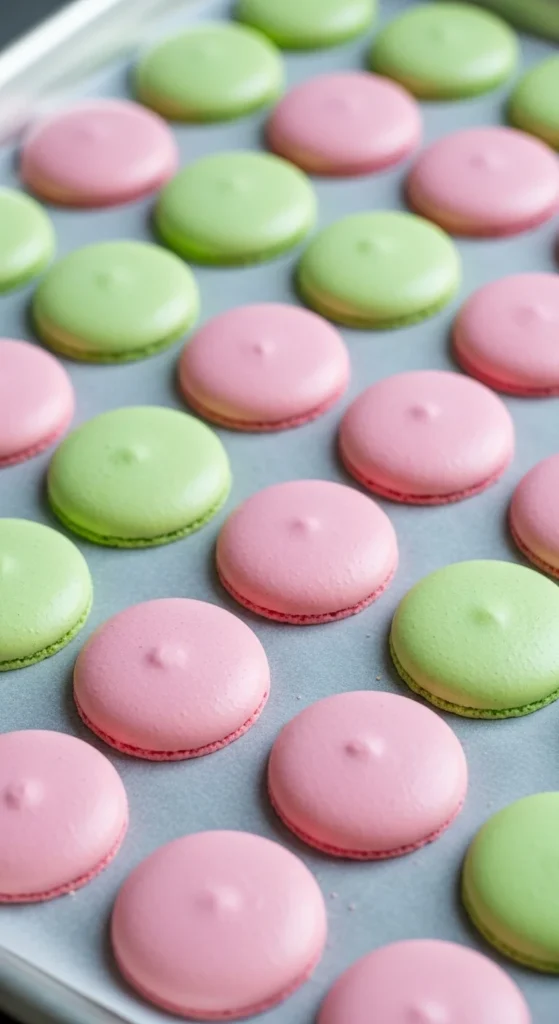
After piping, tap the tray firmly on the counter 3–4 times to release air bubbles. Pop visible bubbles with a toothpick.
Resting Is Non-Negotiable
Resting allows a skin to form on the surface, which is critical for crack-free macarons.
How long to rest:
– 30–60 minutes (depending on humidity)
How to test:
– Lightly touch the top
– It should feel dry and not stick to your finger
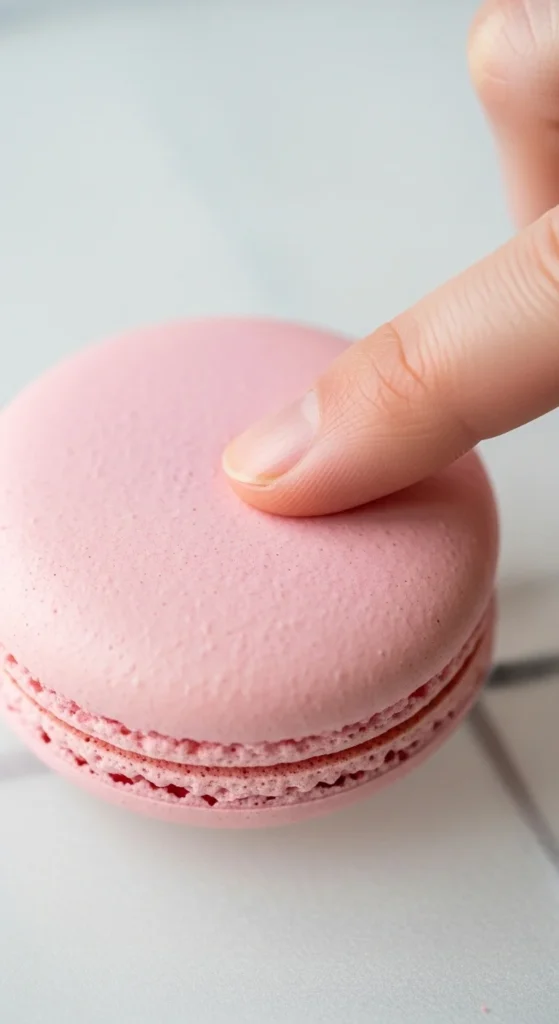
Skipping or rushing this step is one of the top causes of cracking.
Bake at the Right Temperature
Macarons hate temperature extremes.
Ideal oven temperature:
– 150–160°C (300–320°F)
Tips:
– Use an oven thermometer
– Bake one tray at a time
– Avoid fan/convection if it’s too strong
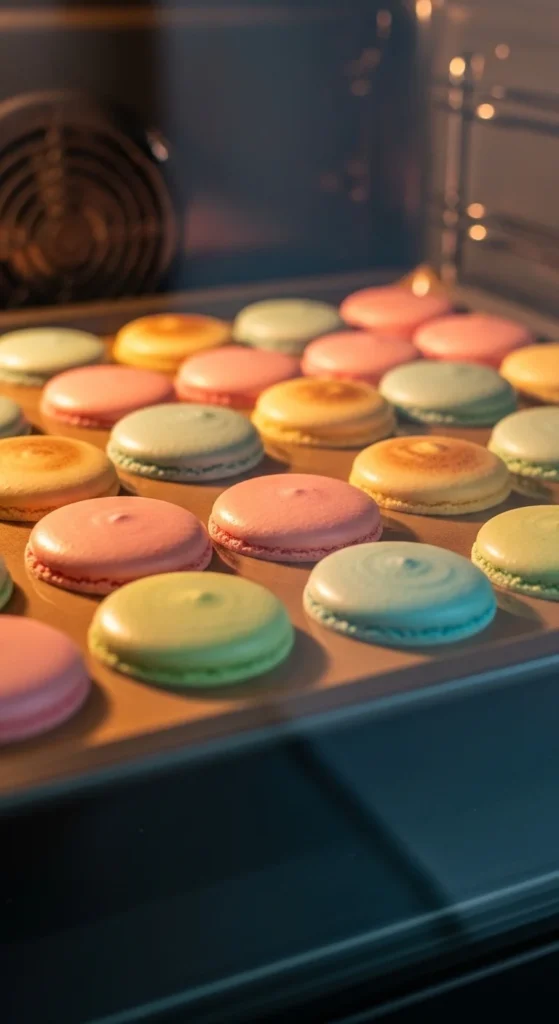
Bake for 12–15 minutes. Shells should not wobble when gently nudged.
Cool Before Removing
Hot macarons are fragile.
Let shells:
– Cool completely on the tray
– Release naturally from the surface
If they stick, they’re likely underbaked.
Common Reasons Macarons Still Crack
If cracks persist, check for:
– Too much moisture in the kitchen
– Oven running hot
– Batter too thick
– Skipping tray tapping
– Old almond flour
Small adjustments make a big difference with macarons.
Final Takeaway
Crack-free macarons are all about control —control of air, moisture, and heat. Once you dial in your technique, macarons go from frustrating to incredibly satisfying.
Don’t rush the process, trust the steps, and practice with intention.
👉 Save this guide for later and bake your next batch with confidence—smooth tops and perfect feet included 💕🍪