Caramelized onions are one of those magical kitchen transformations. Sharp, pungent onions slowly melt into something sweet, silky, and deeply savory—but only if you give them time. Rush the process, and you’ll get browned onions, not caramelized ones. The good news? True caramelized onions don’t require fancy skills—just patience and a little know-how.
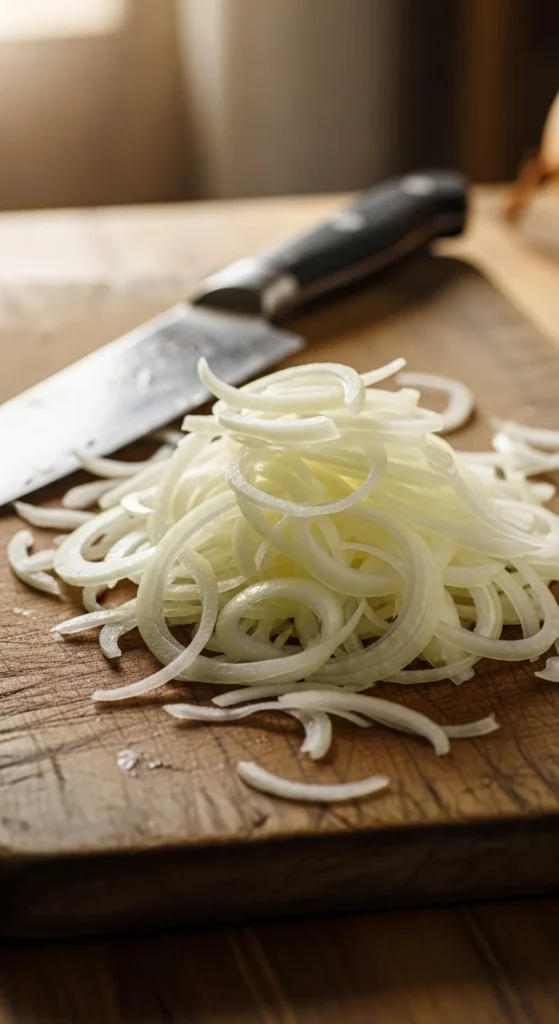
Let’s walk through exactly how to slowly caramelize onions for maximum flavor and that rich golden-brown color.
Choose the Right Onions for Caramelizing
Almost any onion can caramelize, but some work better than others.
Best choices:
- Yellow onions – balanced sweetness and depth
- Sweet onions – caramelize faster, very mild flavor
You can use red or white onions, but:
- Red onions produce a lighter, slightly tangy result
- White onions are sharper and take longer to mellow
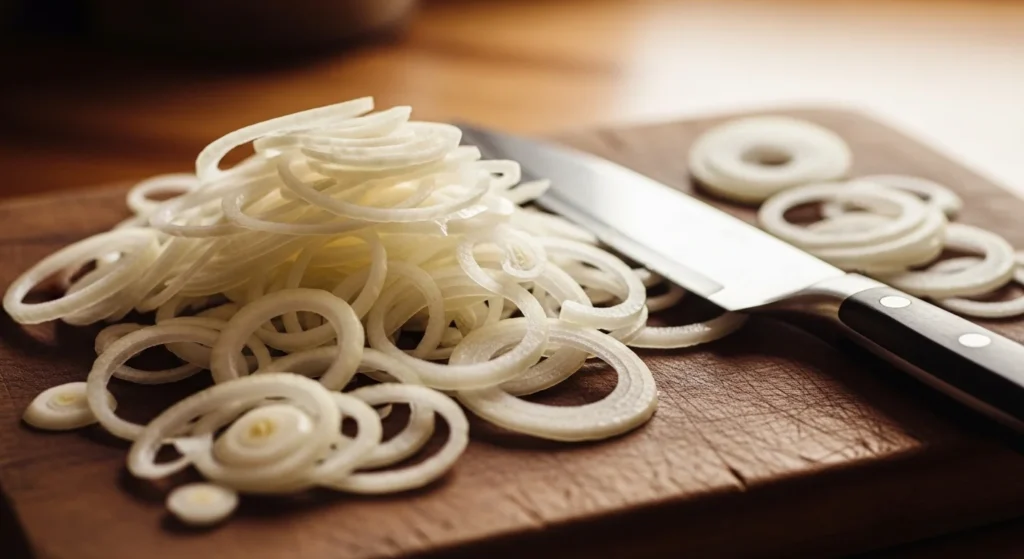
Slice onions evenly so they cook at the same rate. Uneven slices lead to burning and undercooked bits.
Slice for Slow, Even Cooking
How you cut onions affects how they caramelize.
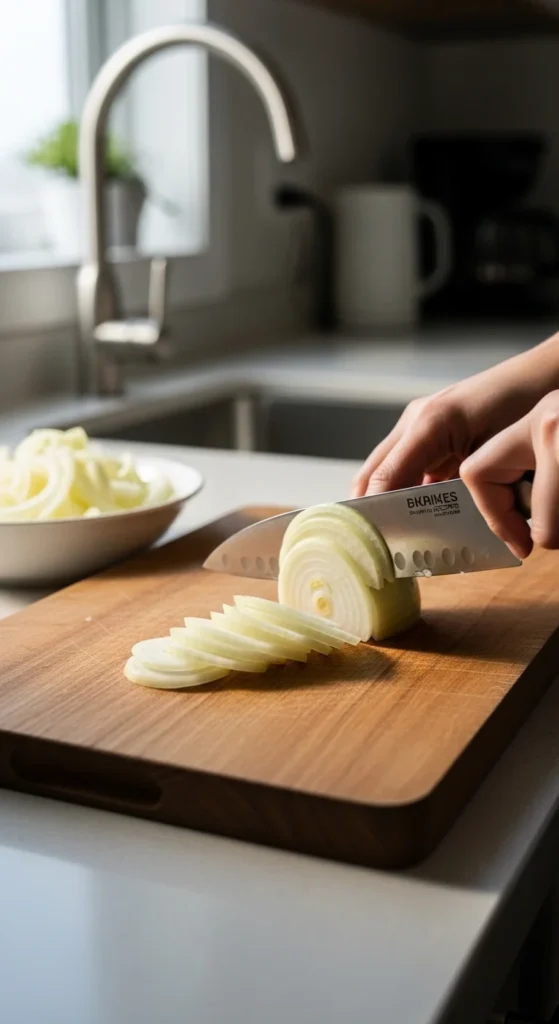
Best slicing method:
- Cut onions pole-to-pole (root to stem)
- Aim for thin, even slices—not paper-thin
- Keep slices similar in size
Pole-to-pole slices hold their shape better and turn silky instead of mushy.
Use a Wide Pan and Plenty of Space
Crowding onions causes steaming, not caramelizing.
What works best:
- Wide, heavy-bottomed skillet
- Stainless steel or cast iron
- Large enough to spread onions in a thin layer
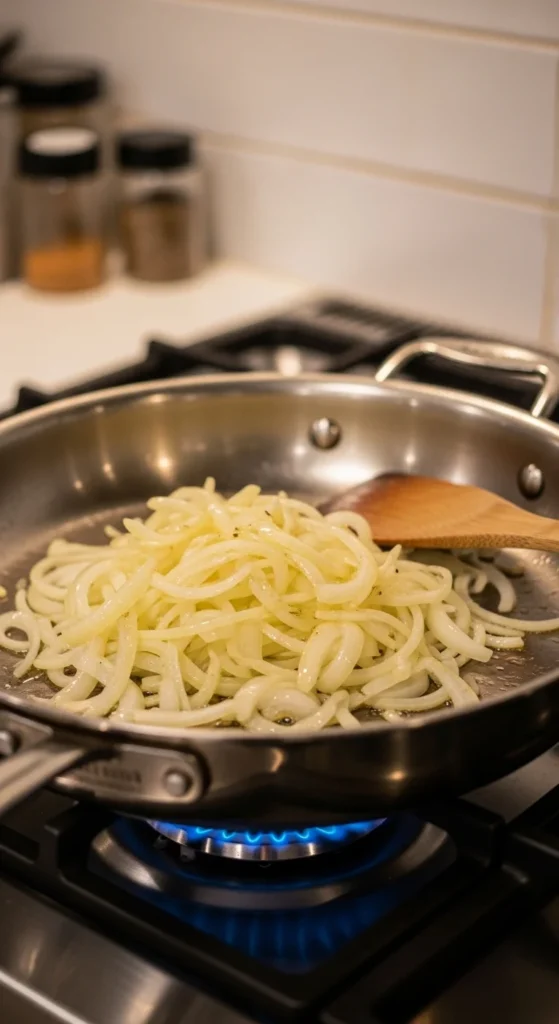
Add fat:
- Butter for flavor
- Oil for higher smoke point
- Or a mix of both for balance
Cook Low and Slow (This Is the Key)
True caramelization takes time—usually 30–45 minutes.
Step-by-step:
- Heat pan over low to medium-low heat
- Add fat, then onions
- Sprinkle with a pinch of salt to draw out moisture
- Stir every 3–5 minutes
What’s happening:
- Water slowly evaporates
- Natural sugars break down
- Onions deepen from pale to golden to deep brown
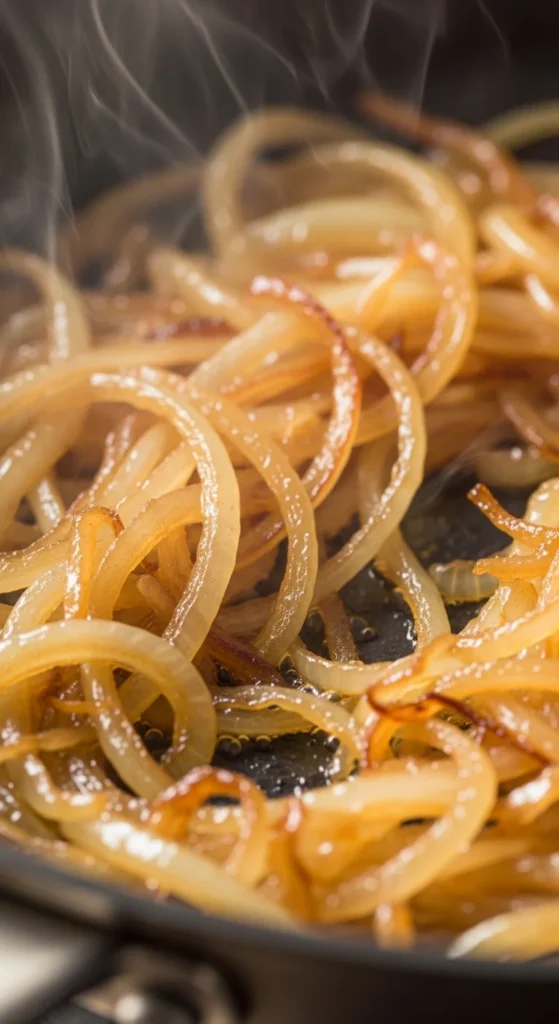
If onions start browning too fast:
- Lower the heat
- Add a splash of water to slow things down
Build Flavor as They Cook
Once onions are soft and golden, you can deepen the flavor even more.
Optional flavor boosters:
- Splash of water, broth, or wine to deglaze
- Small pinch of sugar (only if onions aren’t sweet)
- Fresh thyme or bay leaf
Scrape up browned bits from the pan—they’re packed with flavor.
Know When They’re Truly Done
Perfect caramelized onions should be:
- Deep golden to rich brown
- Soft, jammy, and silky
- Sweet with savory depth, not bitter
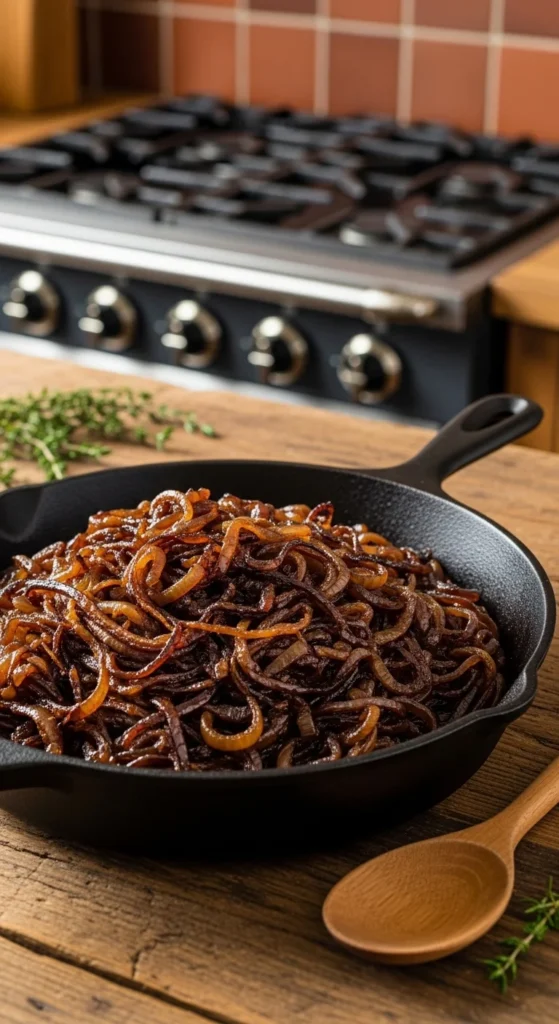
If they taste sharp, they need more time—not more sugar.
Store and Use Caramelized Onions
Caramelized onions keep well and improve many dishes.
Storage tips:
- Refrigerate up to 5 days in an airtight container
- Freeze in small portions for up to 3 months
Use them in:
- Sandwiches and burgers
- Pasta, risotto, and grain bowls
- Eggs, tarts, and flatbreads
Final Takeaway
Slowly caramelizing onions is an exercise in patience—but the payoff is huge. Low heat, steady stirring, and time transform humble onions into a deeply flavorful, versatile ingredient you’ll want to keep on hand.
Save this guide for later, and let your onions take their sweet time 🧅✨