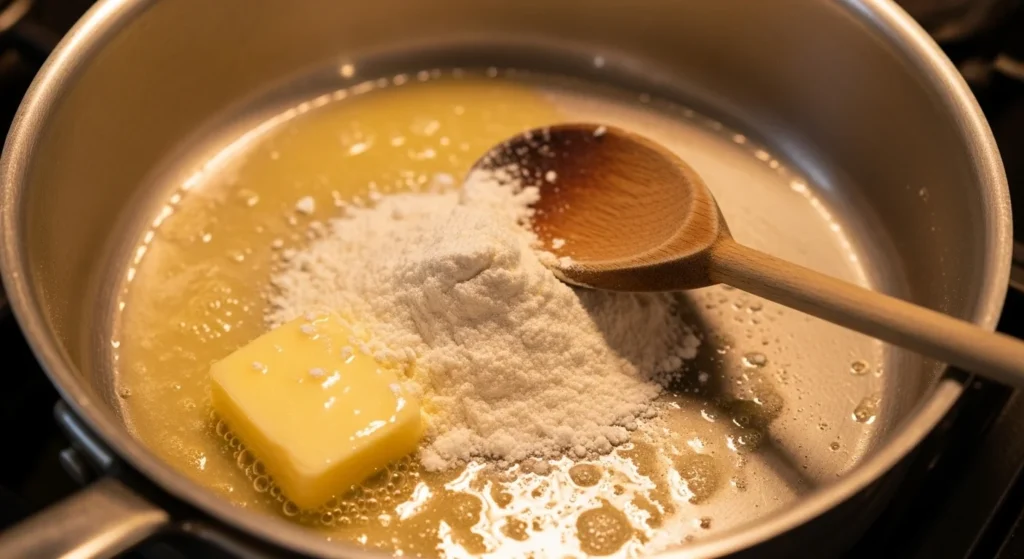
Roux is one of those quiet kitchen skills that separates good cooking from great cooking. When it’s done right, sauces turn silky, gravies thicken evenly, and soups feel rich without tasting heavy. When it’s done wrong? Lumpy, greasy, or oddly thin results.
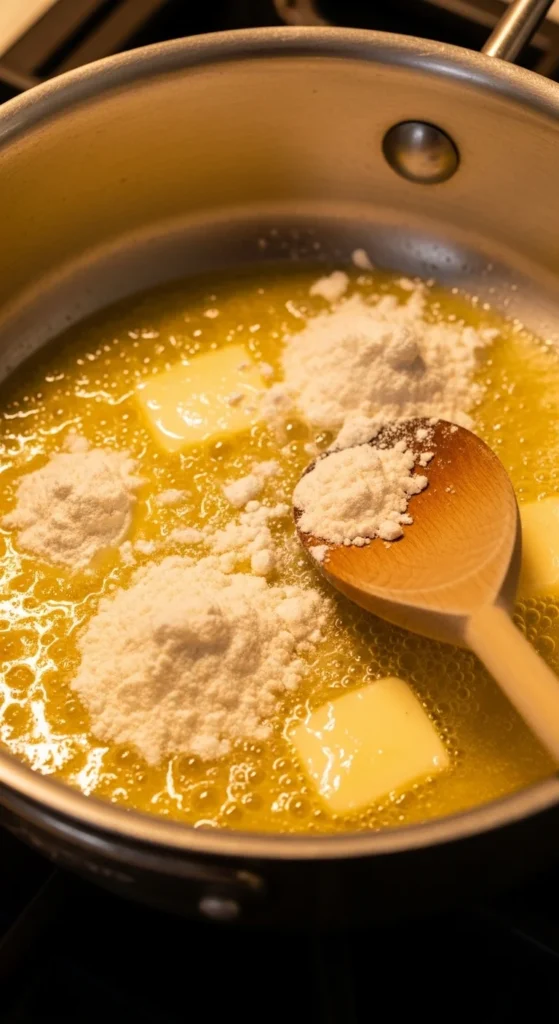
The good news is that making a perfect roux isn’t hard—it just requires attention and timing. Once you understand how it works, you’ll be able to thicken almost anything with confidence.
What Is Roux and Why Does It Matter?
Roux is a cooked mixture of fat and flour, used to thicken sauces, soups, and stews.
Common uses include:
– Gravy
– Béchamel (white sauce)
– Gumbo
– Cheese sauce
– Cream soups
Cooking the flour in fat removes its raw taste and activates its thickening power.
The Basic Roux Ratio
(Get This Right First)
The classic roux ratio is simple:
– 1 part fat
– 1 part flour (by weight)
For home cooking:
– 2 tablespoons butter or oil
– 2 tablespoons all-purpose flour
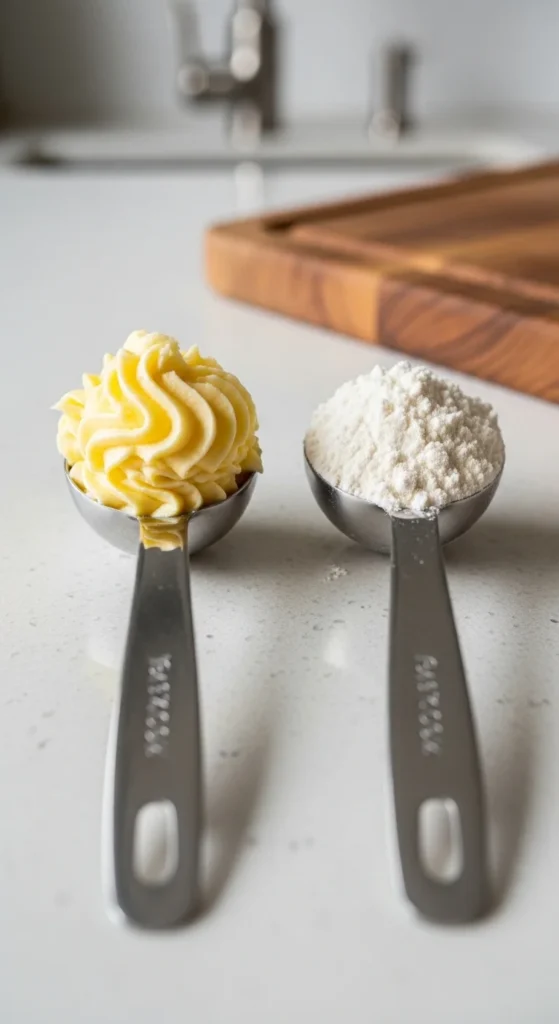
Using equal amounts ensures even thickening without greasiness.
Choose the Right Fat for Your Dish
Different fats slightly change the flavor.
Popular choices:
– Butter (rich and classic)
– Vegetable oil (neutral)
– Bacon fat (savory)
– Chicken fat (deep flavor)
Butter is ideal for white and blond roux, while oils work well for darker roux that cook longer.
Step-by-Step: How to Make Roux That Thickens Smoothly
Step 1: Melt the fat
Heat your pan over medium heat and melt the fat completely.
Step 2: Add the flour
Sprinkle in the flour while stirring continuously to avoid clumps.
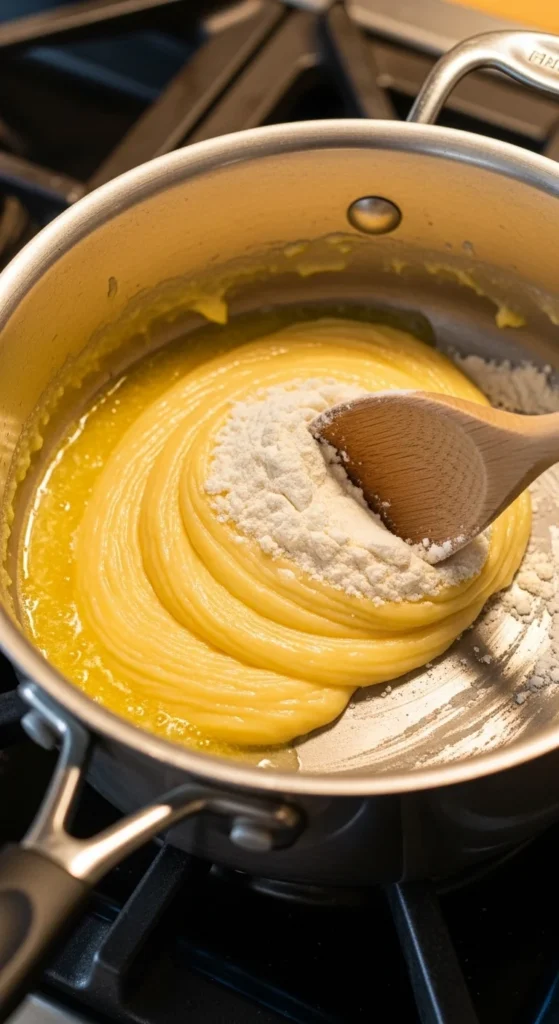
Step 3: Cook and stir
Keep stirring with a wooden spoon or whisk. The roux should look smooth and bubbly, not greasy.
Cooking times depend on the color you want.
Roux Colors and What They’re Used For
White roux (1–2 minutes)
– Pale, no color
– Maximum thickening power
– Best for béchamel and cream sauces
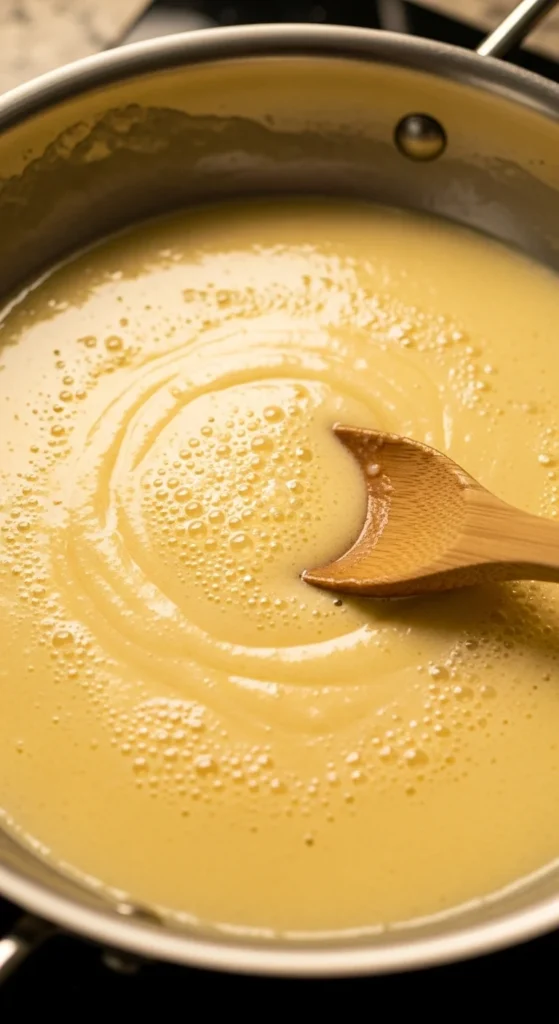
Blond roux (3–5 minutes)
– Light golden color
– Slightly nutty aroma
– Perfect for gravy and soups
Dark roux (10–20 minutes)
– Deep brown color
– Rich, toasted flavor
– Used in gumbo and Cajun dishes
Note: The darker the roux, the less thickening power it has.
How to Add Liquid Without Lumps
This step makes or breaks your sauce.
Best practice:
– Turn heat to low
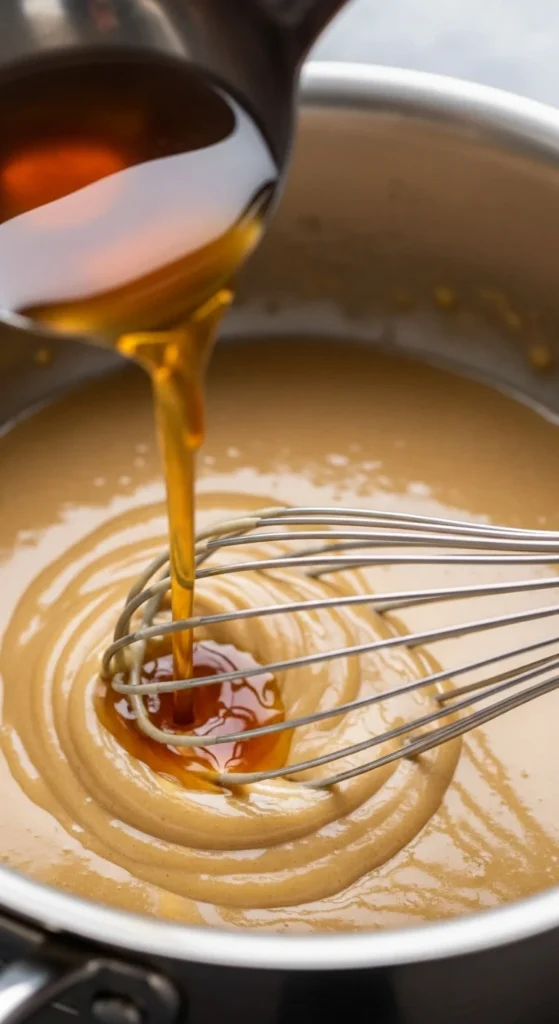
– Add liquid – gradually
– Whisk constantly
Cold liquid into warm roux (or warm liquid into cooled roux) helps prevent lumps.
Fixing Common Roux Problems
Too thin?
– Simmer longer to reduce
– Make a small extra roux and whisk it in
Too thick?
– Add more warm liquid gradually
Lumpy?
– Whisk vigorously
– Strain if needed
– Use a blender in emergencies
Tips for Perfect Thickening Every Time
– Don’t rush the cooking stage
– Keep heat moderate to avoid burning
– Stir constantly, especially for dark roux
– Match roux color to your dish
– Taste as you go
A properly cooked roux smells nutty and smooth—not raw or burnt.
Final Takeaway
Mastering roux gives you control over texture, thickness, and flavor. Once you know how long to cook it and how to add liquid properly, you’ll never fear sauces or gravies again.
👉 Save this guide for later and use it whenever your dish needs the perfect silky finish 🥄✨